
Many large iGaming affiliates already send operators players on a cost-per-acquisition (CPA) basis. We explains how a white-label DSP lets them also sell those operators programmatic media under their own brand, and what running one takes.
Every month, a large affiliate sends an operator players on CPA, and the same operator buys its programmatic media from a platform that knows less about iGaming traffic than the affiliate’s buyers do. The affiliate earns only on the deposits it delivers.
Affiliate businesses are already moving past search. A TheGamblest analysis from April 2026 found that the largest affiliate sites now lean on diversified traffic sources, and it lists multi-channel acquisition beyond SEO as a requirement for success. Affiliates that already buy paid traffic at volume have a less obvious option: selling programmatic media to the operators they already work with.
Affiliates Already Know What Operators Want to Buy
Three needs come up in our conversations with affiliates. The first is income tied to contracts the operator can rewrite: terms change, revenue share drops in months when players win, and a single deal can end after a brand review. The second is operators asking for more than a tracked link, such as reach before a big tournament or a sponsorship, when the affiliate has nothing else to sell. The third is buying spread across several ad networks and platforms, with no single view of spend, sources or margin.
Large affiliates already have most of what it takes to close those gaps. Their paid teams buy pop, push, native and display traffic every day. They know which sources convert in which GEOs, how fast a casino creative burns out and which landing pages hold up under volume.
Today, that knowledge rarely leaves the building. When an operator asks for help with programmatic buying, the request usually turns into an informal favor or a polite no, and the operator takes its budget to a generic platform instead. The pitch to that operator is simple: media bought by people who already know which sources send its depositing players, reported next to the affiliate’s CPA traffic.
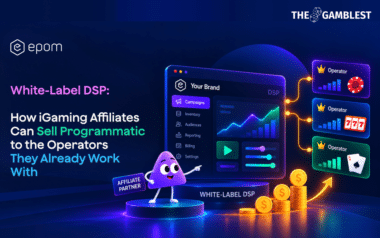
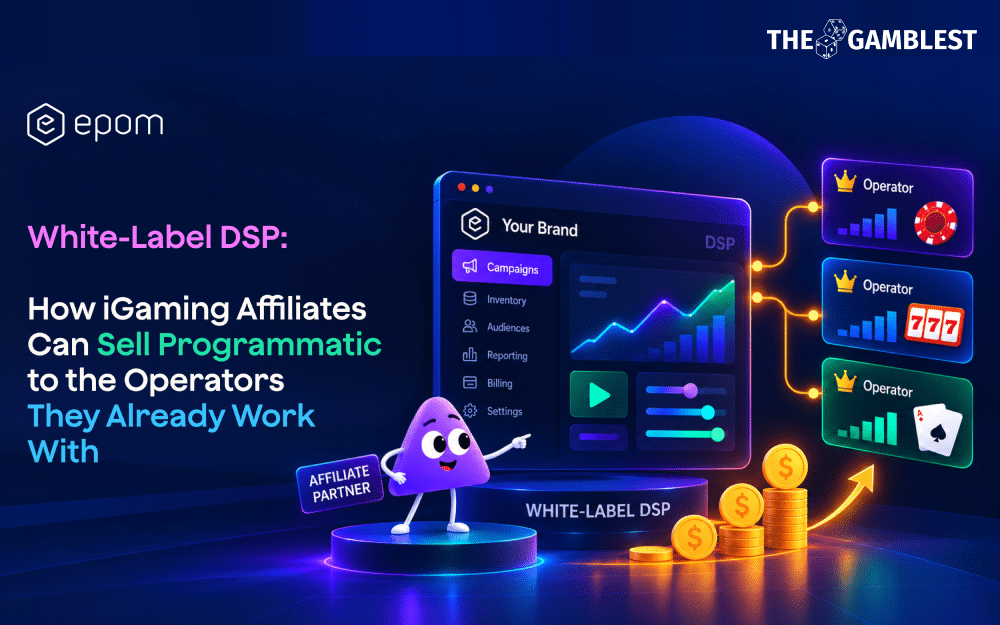
A white-label demand-side platform (DSP) closes those gaps without a technology build. It is a DSP licensed from a vendor and run under the affiliate’s own brand: clients log in on the affiliate’s domain, and the vendor runs the infrastructure and stays invisible. Its revenue does not depend on any one operator’s contract. It still depends on clients whose campaigns have to convert, but that risk is spread across many budgets instead of sitting in one contract.
Three Ways an Affiliate Earns With a Branded DSP
The affiliate running the platform can charge its clients in three ways, and many combine them.
Markup on media spend. The affiliate adds a margin on top of the media cost each client pays. Revenue grows with client spend, and the client never sees the margin itself.
Platform fee. Experienced buyers pay a monthly fee for their own seat and run campaigns themselves. Income is predictable but does not grow with spend.
Managed service. The affiliate’s team runs campaigns for the client and charges a service fee or a share of results. This fits operators without in-house programmatic skills and earns the most per client, but it uses the most staff time.
A practical path starts inside. The team runs its own buying through the platform first, then offers managed campaigns to two or three operators it already knows well. Once those run smoothly, it opens self-serve seats to operators with their own buyers, and later to smaller affiliates.
What It Takes to Run One
Running a DSP turns part of the affiliate into a software business, and the work does not stop at launch.
Supply comes first. A DSP buys impressions from supply-side platforms (SSPs) and ad exchanges through OpenRTB, the standard protocol for real-time bidding. A white-label setup usually arrives with pre-integrated SSP connections, and the affiliate can add its own SSP partners on top, as long as they sell over OpenRTB; the vendor’s team handles the technical integration. For gambling, the real work is choosing which of those sources accept the vertical in each market.
Client support comes next. Clients will ask why a campaign is not spending, why a creative was rejected or why numbers differ from their tracker, and they expect answers within hours.
Gambling compliance follows. Every client campaign must target only licensed GEOs, follow local age rules and carry compliant creatives.
Traffic quality decides retention. Clients judge the platform by what they buy through it, and poor traffic under your brand damages the affiliate’s reputation, not the vendor’s.
Sales is the last piece. The first clients usually come from existing relationships with operators and partner affiliates. Growing past them takes a clear pitch, published pricing for each model and results from the affiliate’s own campaigns that prospects can check.
How Epom White-Label DSP Shortens the Launch
Epom White-Label DSP is a rebrandable DSP that runs on dedicated servers. It supports client-branded reporting and multi-account workflows, so each operator or partner works in its own account under the affiliate’s brand. Admins choose which permissions each client gets and hide the fields that client does not need.
Picture the first operator client. It logs in on the affiliate’s domain and sees its balance and spend in gross terms, with traffic sources labelled however the team chooses. The team sets that client’s markup, which the client never sees, and connects its own SSP partners, including sources that accept gambling demand, next to the pre-integrated ones. Pixalate filters traffic before the bid, and server-to-server (S2S) postbacks send each registration and first deposit back to the platform, where rules cut bids on sources that stop converting.
Inga Sydorenko, Sales Executive at Epom, says:
Large affiliates already have the hardest part, which is knowing what converts. The platform gives them a way to charge for that knowledge. Most of the setup work is branding, supply and client accounts, because the core technology is already running.
Proof in Practice: BreakRoom
BreakRoom set out to launch a DSP in a market where none existed. Building the technology in-house would have taken years.
It is open about being early in its DSP journey. According to Epom’s customer story, the first months went to awareness campaigns, with conversion tracking still being set up and retargeting planned next. That is the realistic shape of a launch: the platform goes live quickly, and the commercial side takes a season to build.
Is a DSP the Right Next Step?
A branded DSP fits affiliates with an experienced paid traffic team, existing operator relationships and people who can handle client support. Affiliates that buy only a little paid traffic should start by building that team first.
The affiliate already knows which traffic brings an operator’s depositing players. A branded platform lets it sell that knowledge to the same operator twice: once as CPA traffic, and once as media the operator would otherwise buy from someone who knows less.